
Broad Feet
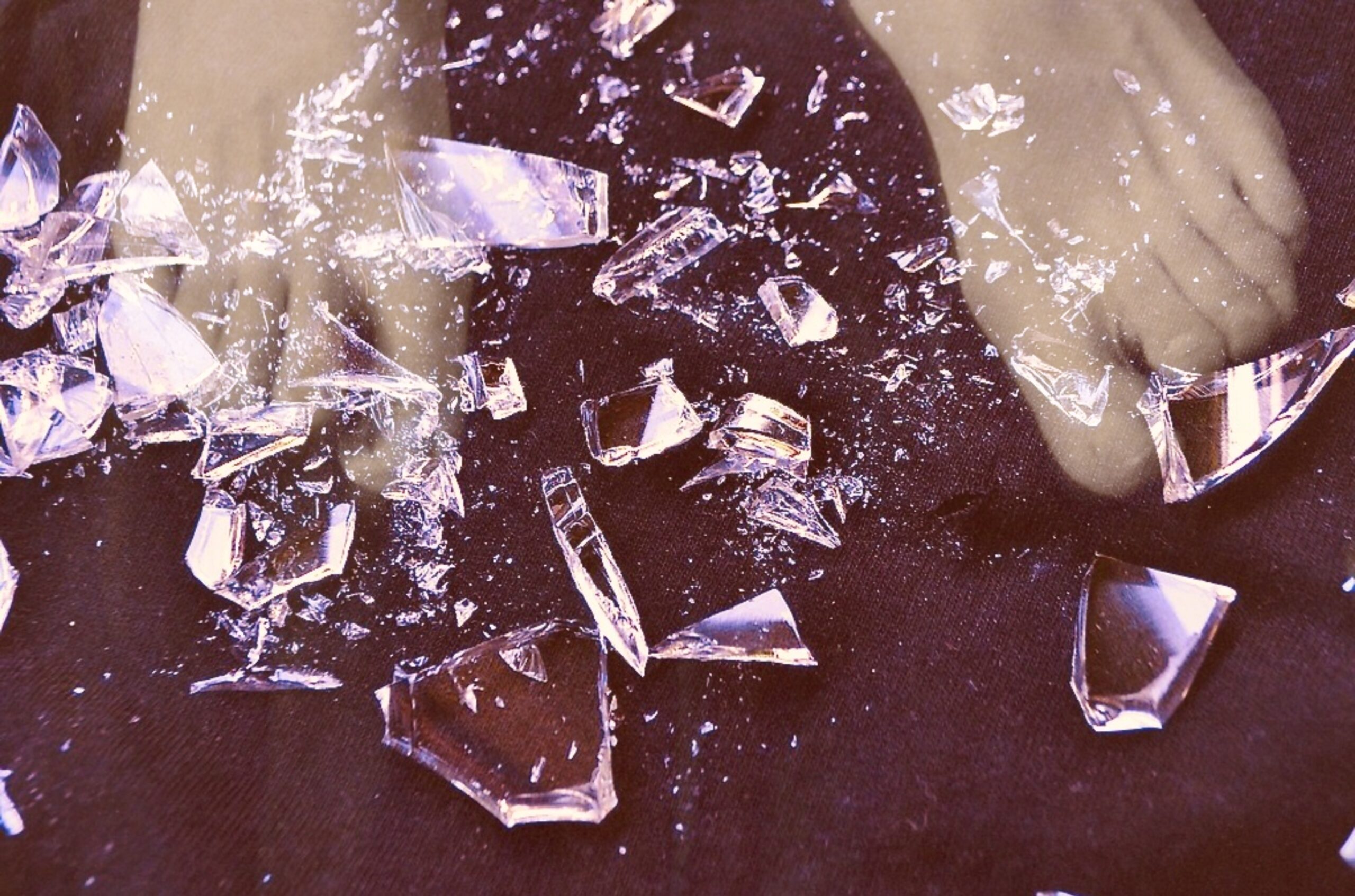
Georgia O’Keeffe – Feet (1918), Alfred Stieglitz. Courtesy of Art Institute of Chicago. (Untitled) (2016), Marcela Bolivar. Courtesy of Pixabay. Ouchy (2026), Katherina Gontaryuk
Nazuk loved the chappal store. The summer brought slippers, open-toed sandals, kolhapuris, and hawai chappals that made even the fatties buoyant. In the winter, ladies loved pumps, court heels, comfort moccasins for the grannies or the closeted lesbians, and the occasional back-opens. And regardless of winter or summer, there was always the working-girl collection. “Working-girl” is a loose term in Pakistan. It can mean a girl in school, or one who works at an actual office, or just a feminist who hates tradition. These gals wore boots, sneakers, tennis shoes, and every rip-off of Nike, Puma, or Adidas. Even Reeboks. It is well known that there are two things you will see on Youm-ul-Hisaab, still around despite the apocalypse: Reeboks and cockroaches.
Undoubtedly, the best part was the heels. Shaytan was real, and my God could he make the ladies’ mouths water with a bare, uncracked heel in a heel. Nazuk loved them all: platforms, wedges, stilettos, blocks, kittens, pumps, T-strap, slingback, high, ultrahigh—and most of all, the wedding collection. She didn’t care much for marriage itself, but the shoes made a lifetime of unpaid domestic labor seem like a fair exchange. They came in the brightest fuchsias, shimmering all-season golds and silvers, flame oranges, parrot greens, magentas, and, of course, red—the color of a bride’s face on the sheets after her first night with her husband. That is, if she had been appropriately chaste beforehand.
Like the masjid, the shoe store drew people of every class and kind. Unlike the masjid, however, the women far outnumbered the men. Next to the pissed-off male relatives sulking on couches were the usual customers: middle upper–, middle-, and upper lower-class aunties, their daughters, sisters, sisters-in-law, mothers, and mothers-in-law. But there were also a lot of schoolgirls, brazen brides-to-be, even trans women with their not-out-boyfriends-cum-someone-else’s-husbands, and, rarely, elite madams. Ohouuu, don’t get the wrong idea. They came with their maids, whom, out of the goodness of their hearts, they let buy a midrange sandal.
Yes, this was one of the only semipublic spaces in Pakistan where the men found themselves the fewer, and this affected their temperament. These bhais stood around listening to the all-powerful customers. In their blue shirts and gray slacks, black polished shoes, and name cards, they idled around quietly unless ordered to find a shoe. And the method—wow. Cricket or football she never got, but Nazuk was a fan of this sport.
Cricket or football she never got, but Nazuk was a fan of this sport.
Here’s how it went: a customer pointed to a shoe or a bunch of shoes, “Ye wala, ye wala, or ye wala bhi. Size 38.” And then the bhai would shout out the order with a bunch of numbers—the serial code—as well as the size and color: “38 size, DDb234, WHITEEE; 38, BN640L, REDDD; 38 and 39, CP34E, BLACKKK.”
The woman would sit on a sofa and wait for the salesman, who stood beneath a hole in the ceiling. He would catch shoeboxes as a man above threw them down from shoe heaven. Thud, thud, thud, and not a single miss. Sometimes, when an especially good-looking salesman caught a shoebox midair, dropping to one knee as he did, Nazuk found herself blushing.
Next, he would take the woman’s right foot in his hand. Yes, the bhai from earlier. Nazuk could never understand how this was permitted in Pakistan when publicly holding hands with a boyfriend was forbidden. The woman would raise the hem of her shalwar, baring her leg for the whole world to see. He would remove her shoe and put on the one requested, even fastening the strap on a sandal or tying the lace on a jogger. Can you imagine?
“Wow, madam, this one looks too beautiful,” he’d coo, or “Baji, you should definitely buy this one. Such a special piece, and on you, wah!” The lady would smile shyly, yet contentedly. Nazuk loved it. Oh, how she waited for the day she would wear a shoe with a perfect fit, catwalk to the long mirror and back, and hear “Baby, those heels were made for you.” Every compliment came attached to a sale, but that didn’t make hearing it any less sweet.
“Wow, madam, this one looks too beautiful,” he’d coo, or “Baji, you should definitely buy this one. Such a special piece, and on you, wah!”
Deep in her heart, Nazuk worried that day would never come. She hated her feet. Size 41, big, although not outrageously big, but broad. Whenever she squeezed into heels, her toes swelled up and flesh spilled over the sides, betraying her before she could take a step.
And mind you, she weighed 70 kilos, give or take. She wasn’t skinny, but Nazuk sure as hell wasn’t fat. Plus, she’d tried every diet in the book. Crash, intermittent fasting, keto, no dairy, no gluten, no carbs, detox, paleo, vegan, and vegetarian. There was that one year she went to the gym, the summer she swam, and that one spring she took up bicycling around the neighborhood until the uncle in 142 G-2 wouldn’t stop licking his lips while making eyes at her. When her daadi suggested it, Nazuk even went to Sehwan Sharif, the magnificent mausoleum of the Sufi saint Lal Shahbaz Qalandar, and got a little thread to tie around her wrist, which the gaddi nashin Pir vigorously prayed on. The Pir didn’t mind that Nazuk was “fat” either, and he was happy to gawk at her as she uncomfortably sat while he blew in her face, murmuring prayers under his breath.
Maamis and chaachis, phuppos and khalas, neighborhood aunties, kaam-wali bajis, schoolteachers, friends, the ayahs at her school, even random strangers on the street. Everyone, including her own bloody, loving family, regularly reprimanded Nazuk. “Beta, get control of your weight now while you’re still young. Phir baad mein, you won’t be able to. Look at me.” “Nazuk, when you get married, you’ll have to do all kinds of crash diets. Boys don’t like bigger girls.” And worst of all, “Nazuk, wese you aren’t really ‘nazuk’ at all, are you? What a fragile name for such a bulky girl. You are only nazuk in temperament.” They were worried about her health, her skin, her menses, and the likelihood of her having babies, if ever. Her liver and gallbladder, her joints when she turned 80, her “look,” her public perception, but most of all, her prospects as a bride. Her body belonged to the Islam-ish Republic of Aunties.
Everyone, including her own bloody, loving family, regularly reprimanded Nazuk.
“Baji, which one would you like to try on first?” The salesman squatted awkwardly on the floor, venturing a half smile at Nazuk and hoping to secure some commission. He was no older than 30, although it was hard to pin down his exact age given his darkened, wrinkled skin, presumably from biking with no sunscreen or helmet, and his receding hairline. Imran, his nametag read, but no one was expected to be called by name. The name tag existed in case of complaints: identification reduced to procedure over personhood.
Imran was holding out the heel Mama had suggested Nazuk try on: a wedge with copper straps meant to crisscross the foot. The forever shoe of the “plus-size” woman. Nazuk looked around at the other open boxes, their lids tucked underneath, the options spread in a wide arc. Where was the pencil heel she had requested earlier—the hot pink one with the butterfly meant to sit delicately atop her toes? She took a deep breath. The store usually smelled of leather—“chamri,” or skin, as the locals called it—and cheap rose-scented air freshener, but that afternoon, all she could catch was the lingering scent of biryani. The staff ate lunch cross-legged on floor mats, sharing steaming plates of curry and flatbread from the dhaba down the street, and Nazuk thought that she was going to be sick.
Among the slew of garish, diabetes-friendly, broad-footed chappals Mama and Imran had conspired to lay out for her, she could not find the titli heels. Nazuk got up from the chair, still mum, and went over to the bridal rack where she had first seen the pink number.
“Show me this one please, size 41 mein.”
“Baby jee, this one is very narrow in the front, you see. It won’t fit,” Imran ventured.
“Nazuk, where are you even going to wear that tacky pink heel? Look, try on the wedges first, and I’ll ask Canada-wali khala to send you some nice stilettos during the Christmas sales. They make all kinds of shoes there for women of every size. Very inclusive,” Mama offered. Now she was supposed to do what? Wait another 10 months for Gudiya Aapo, her mum’s “foreign” sister, to send her some hand-me-downs she didn’t even want? No, Nazuk was going to have the titli heels, come what may.
“Can you please show me the shoe?” Nazuk looked at Imran, her eyes welling up. Imran gestured toward Mama, and once she reproachfully nodded, he shouted, “FP573L, sizes 41 and 42, PINKKK!” As the pair dropped from the hole into Imran’s carefully positioned lap, Nazuk’s eyes glistened. What if they didn’t fit? What if she was humiliated? Double the embarrassment, and this time, there’d be no hiding it. Nazuk imagined Imran and Mama exchanging knowing looks, customers turning to stare, and even babies in strollers pointing from across the store. In her mind, the television mounted in the corner abandoned the hourly news bulletin to zoom in on her feet. She had no business wanting beautiful things.
Nazuk sank back onto the couch and peeled the sock off her left foot, even though tradition—or rather, superstition—dictated trying a new shoe on the right first. But her left foot swelled less than her right, and she secretly considered it the prettier of the two.
In her mind, the television mounted in the corner abandoned the hourly news bulletin to zoom in on her feet. She had no business wanting beautiful things.
The pink heel was even more stunning out of its case than it had looked among the other colors and designs. The butterfly embellishment was larger and more beautiful too, and the five-inch heel was just the right height, tall enough to make Nazuk feel statuesque, but not so tall that Pakistan’s average five-foot-six man would recoil at the sight.
Taking her foot gently in his hands, Imran tried to slide the heel onto Nazuk’s foot, massaging the sides to coax the shoe into place. Then, it happened. Astaghfirullah!
The horror.
The strap snapped, and the butterfly-shaped embellishment flew into the glass display behind Imran, shattering it into a thousand fragments. Heels scattered around the floor like shooting stars, one flying across the room and into the distracted cashier’s face. Nazuk cried out as a jagged shard lodged into her foot, drawing blood. Now Mama was screaming too. Imran had accidentally hit her in the head with the copper wedge she adored while trying to regain control. This beautiful heaven of a chappal store had transformed into hell, just like the rest of the country: a better life was purchasable, but somebody had to bleed for it.

Iman Iftikhar
Publab Fellow 2026
Iman Iftikhar (she/hers) is a DPhil in political theory at the University of Oxford, originally from Lahore, Pakistan. Funded by a Rhodes Scholarship, Iman works on critical theory and postcolonial feminism(s). She did her BA in history and philosophy at Yale before coming to Oxford. She is currently chief editor at South Asian Avant-Garde (SAAG) magazine.
Katherina Gontaryuk
Artist
Katherina Gontaryuk is a writer and ceramic artist living in Santa Barbara, California. She is a PhD candidate in philosophy at the University of California, Santa Barbara, studying how ordinary citizens become agents of injustice at the behest of the state.