
I See You
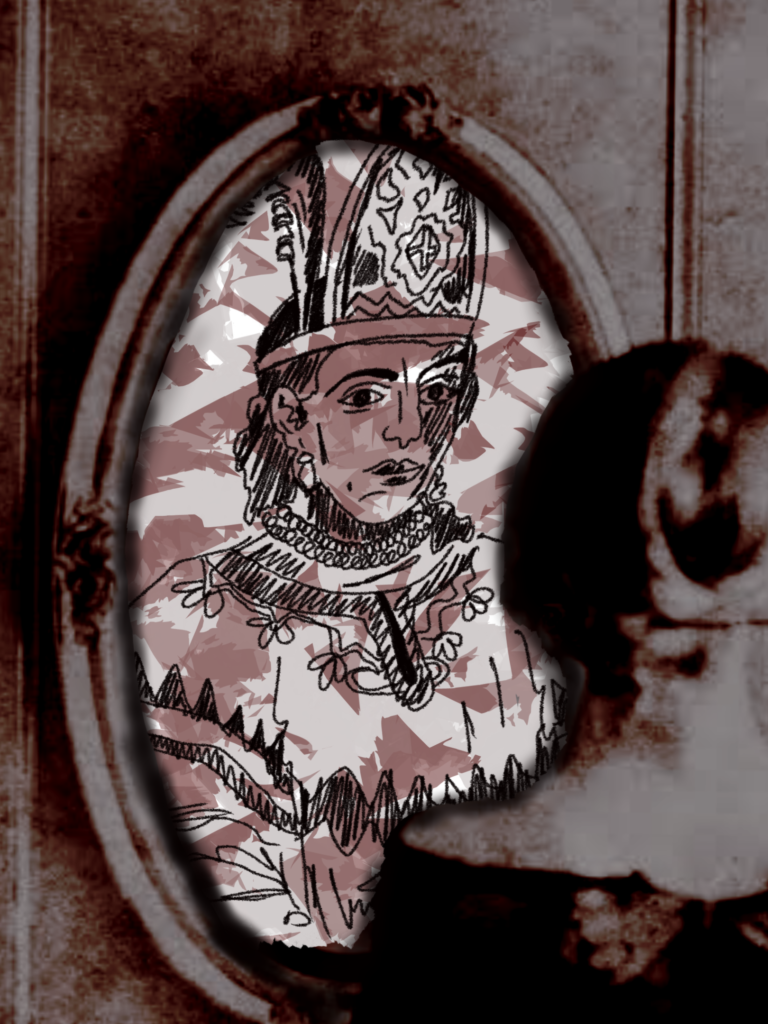
“Mirror Stage” (2026), Iman Iftikhar. Courtesy of artist.
I see you, Malitzen, the betrayer and the victim. You did what you did out of fear and out of smarts. They named you “She who speaks lively.” And you spoke. You spoke all the tongues available to you to make a living, to keep alive. I see your dark eyes like dark holes,
not unlike los de mi abuela Amparo, not unlike those appearing as I age.
Eyes that hide mysteries, reasons, scars. I see the land you grew up in inked on your brown skin, caressed by the tropical sun, with hips that mimic mountains and eyebrows thick and black like the jungles the Spaniards first landed on. I see you standing alone. You don’t belong in your land anymore. You don’t belong to the colonizers either. They own you, yes, but you don’t belong. I see defiance in your expression, but I think it’s a mask. Defiance is another word for fear, a fear that makes you want to fight, to pretend to be more than you are, to claim your right to be. Just to be. The ambition is just to be. Be. Bea.
I see you and I see me. Beatriz, “the bringer of joy,” they named me. A pair of people pleasers,
you and me.
I see you as the one that jumps from them to us, from us to them. It used to be clear, who was us. Now it’s all muddled. I am them. I am us. I see you speaking. I hear you cutting your tongue, blood thick like hot sugarcane, splitting it to accommodate the sounds that belong to foreign languages. Language, lenguaje, lengua, tongue.
What sounds does my your tongue want to do?
I see the scars they left on you. First, enslaved by your people, and then enslaved by Hernán to use at his whim. Yes, you were a victim, but you outsmarted them all. You did what they couldn’t. You spoke for kings and commanders. A woman, a brown woman choosing the men’s words carefully to pass on. Did you avoid even worse bloodshed with your choice? Or did you set your two enemies upon each other, hoping to be the last one standing? I recognize the scars older men leave on young women, robbing them of desire and self-esteem. Scars that make you see your body like a toy meant for others to enjoy. I recognize the need to choose your words carefully, molding them to fit what you imagine will be safest.
It backfired for both of us, don’t you think, Malitzen?
I see you carrying your mistakes in the lines of your forehead, there are three prominent ones. Three lines that cross you like tiny dried-up rivers. Rivers that held the hopefulness of one who knew she was meant for more.
Did your mom tell you not to frown lest you get premature age lines too?
Malitzen, you betrayed your people,
but I betrayed myself.
I let myself become small, quiet, meek. Stop eating. Stop acting. Stop making eye contact. Step by step on the road to disappear. Invisible women can take the fucking cunts as if the words fly past them. Invisible women stand witness as their own hair is being pulled out from their scalps by someone else’s hands. Invisible women are free to haunt the woods and scout for the perfect tree. Invisible women can practice with a dog leash. Invisible women are free to daydream about death.
This is where we’re different, Malitzen. You made yourself big, indispensable, and daydreamed about life. I admire that about you. You were just a woman. You did the best you could.
You fucked the Aztecs, but you lived.
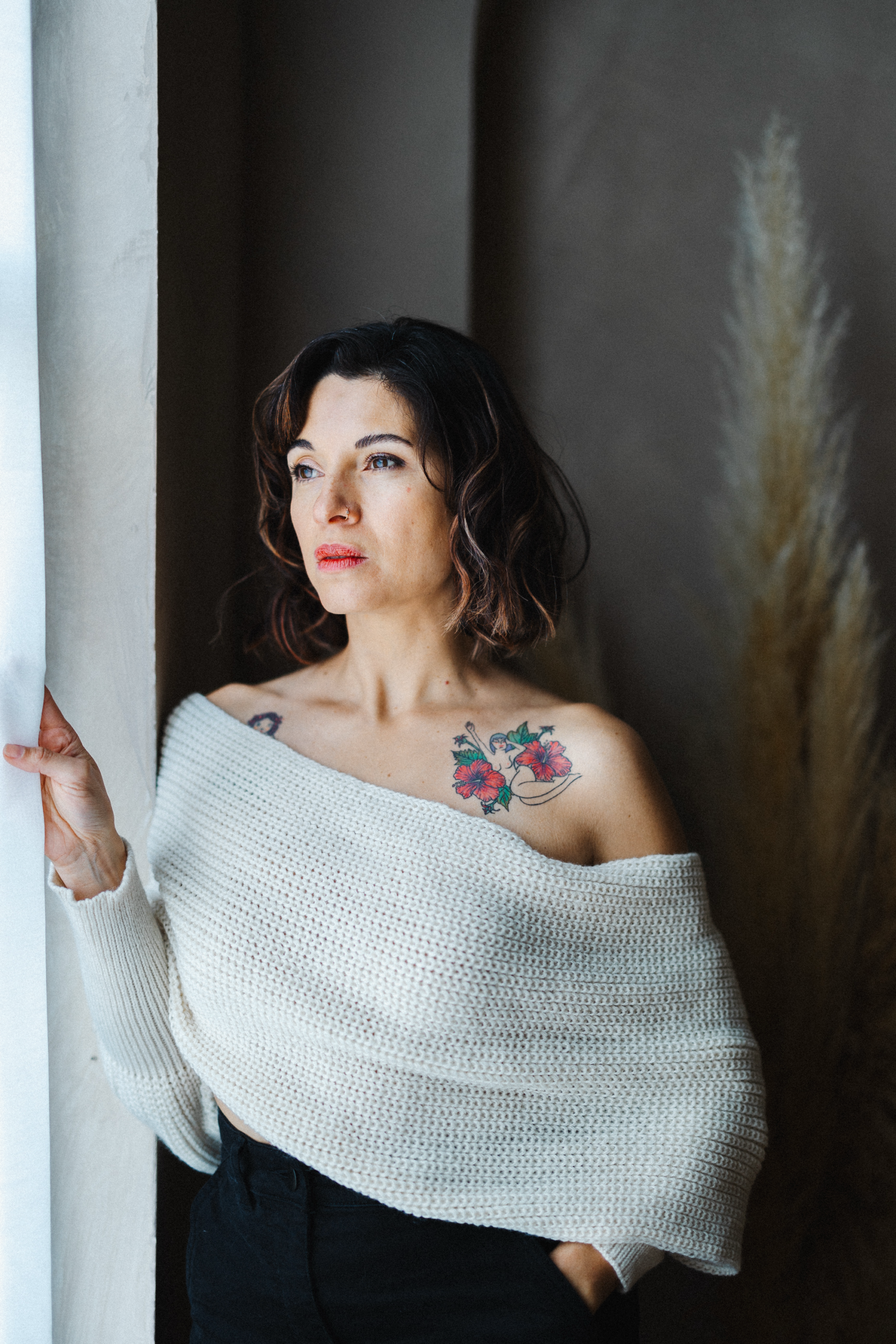
Beatriz Brenes Mora
Publab Fellow 2026
Beatriz Brenes Mora is an award winning Costa Rican actress, video editor and writer. Her work has been published by Barrelhouse, Michigan Quarterly Review and Iron Horse Review. She’s been a fellow at LARB Publishing Workshop, Tin House Workshop, Anaphora Arts, Macondo Writers Workshop and was a semi-finalist for the Key West Literary Seminar Emerging Writer Award. She holds an MFA in Creative Writing from Pacific University and is currently a PhD candidate at the University of Cincinnati, where she lives with Matilda, a way-too-smart mini husky with special powers (like her namesake).
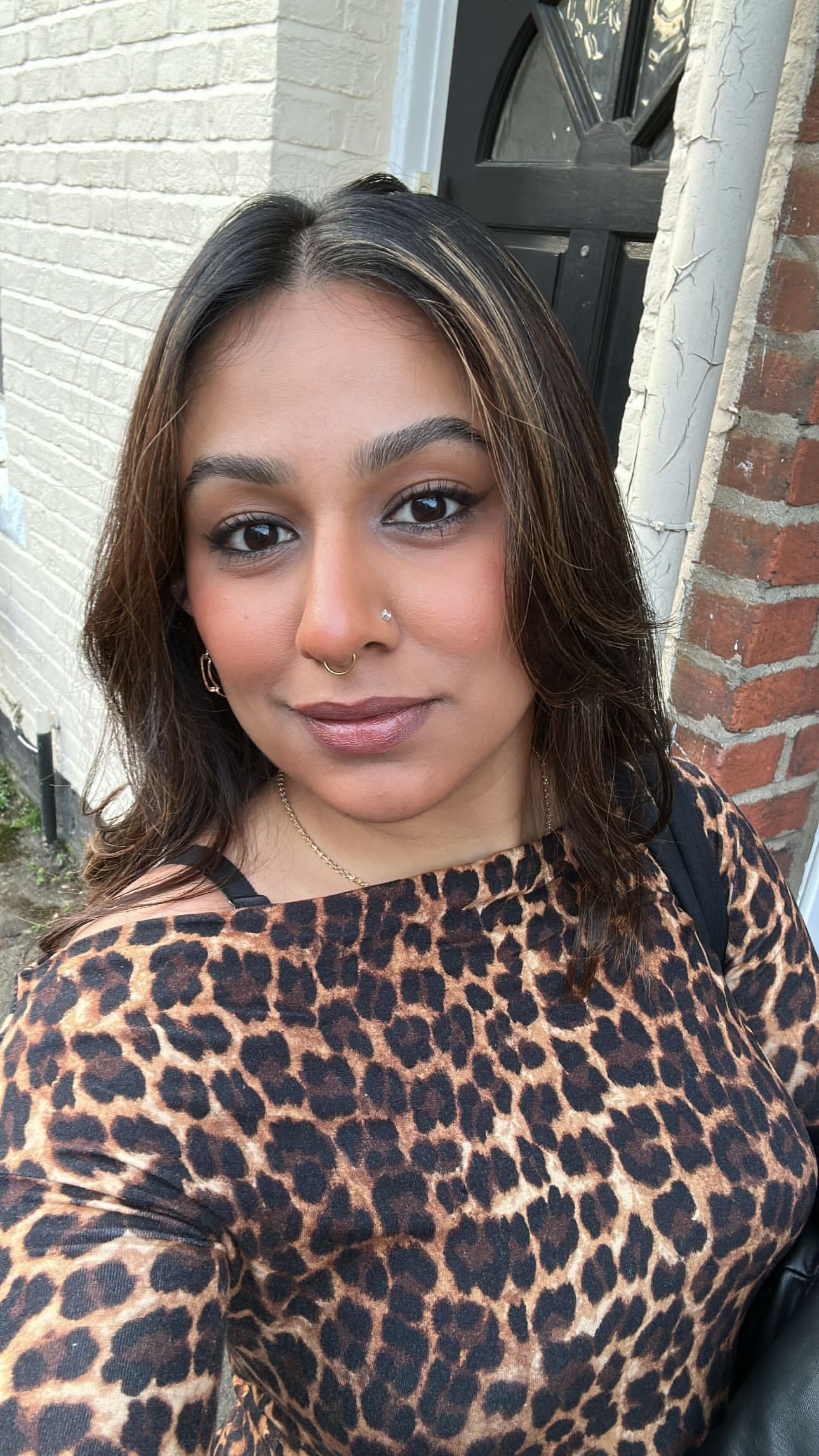
Iman Iftikhar
Artist
Iman Iftikhar (she/hers) is a political theorist, historian, and amateur oil painter and illustrator. She is an editor for Folio Books and a returning fellow at Kitab Ghar Lahore. She is based in Oxford and Lahore.