
Monogamy is Dead, Long Live Monogamy!

“The wedding march” (c. 1850-1920), photomechanical print on stereograph, artist unknown. Courtesy of the Harper Stereograph Collection, Boston Public Library.
When I was a teenager, my mother died. A few years later, my father remarried. I now have the language to describe grief as an encounter with what could have been and cannot be, one in which we negotiate with imagined futures after loss. At that time, however, I found myself extending grief’s negotiation into the only horizon capable of containing it: the afterlife. I asked myself how an afterlife might resolve the love triangle my father’s remarriage had created. If it does exist and we have only one soulmate, I asked, then what will happen when my mother and father meet again? I even asked different rabbis about the afterlife. They told me to focus on living a good life. But I was unsatisfied with focusing on the here and now. I wanted to know what would happen in the great beyond.
This personal history and a large Diet Coke accompanied me into the theater to see David Freyne’s third feature, Eternity (2025), distributed by A24, a film as delightful as it was undermarketed. I was thrilled to see the scenario I’d imagined as a teenager represented on-screen. I was disappointed, however, to see the film’s commitment to the rom-com genre dull the subversive edge and social critique that its excellent concept promised.
Upon her death, Joan (Elizabeth Olsen) is met in a purgatory-like junction by Larry (Miles Teller), her recently deceased husband of 60 years, with whom she has great-grandchildren. Also there to receive her is Luke (Callum Turner), her first husband who died in the Korean War shortly after their marriage and who has been waiting for her ever since. The negotiation with what could have been is reopened.
Joan must choose one “eternity.” The possibilities are endless—eternities open and close like storefronts. Dingle World. High School World. Library World. Bromance World. Museum World. Some are peaceful escapes, some are hedonistic, and others are hellish time shares marketed with high-pressure sales tactics. All are subject to market demand lest they close. Luckily for Joan, Luke and Larry have already chosen the eternities they would like her to live with them in: Mountain World and Beach Land, respectively.
I was surprised to see how many people online were partial to Luke over Larry and how many were upset with Joan for hesitating to pick Larry. If the bots at the bottom of the barrel that make up Instagram comment sections are to be believed, it seems that some men saw her indecision as a moral failing and her afterlife romance with Luke as infidelity. It’s strange, considering that both men had an equal claim to her affections under mortal marriage as we know it—that is, till death do us part. But monogamy and jealousy persist in Eternity’s afterlife (coincidentally, my father’s name is also Larry, and this was a determining factor for which male lead I rooted for).
There are powerful historical forces that shape Eternity’s vision of the afterlife and, in turn, its model of romantic love. In Postmodernism, or, The Cultural Logic of Late Capitalism (1991), Marxist literary critic Fredric Jameson describes the layout of the Bonaventure Hotel to stake his claim that postmodernity is a sort of mutation of perception. The hotel, he writes, is a city in miniature whose reflecting surfaces and disorienting circular symmetries dissolve our spatial orientation, a dissolution that mirrors the vast, decentered networks of late capitalism. For Jameson, these networks of capital are so elephantine that it becomes impossible for us to perceive them in their totality. Instead, we encounter only the effects of the system without being able to conceptualize its whole in a way that would allow us to radically change it.
A similar architecture appears in Eternity in the form of a swanky purgatory consisting of train platforms, cocktail lounges, and a hotel for new arrivals choosing among multiple eternities. The junction comprises endless atria, where all windows are covered by changing curtains to distinguish between day and night, and exit doors lead to oblivion. The bureaucracy behind the afterlife reinforces the Jamesonian disorientation. Anna (Da’Vine Joy Randolph), Larry’s afterlife coordinator, seems to belong to an infinitely vertical organizational chart. She does not know or care if God exists. This suggests that no one understands how the junction operates completely and that revolution, let alone reform, is not on the table for the afterlife residents.
It is no coincidence that the junction has a midcentury modern interior and that Joan’s first husband, Luke, dies in the Korean War. When Luke argues that Joan was happier with him than she was with Larry, she refutes him: “Of course we were. It was young love. It was love without the burden of a mortgage or jobs or kids. The kind of love you feel before knowing loss.”
Their relationship was a love without deregulation and wage stagnation, the product of a prosperous postwar period. It belonged to a particular historical moment that cannot be returned to, no matter how handsome it may look in its service uniform.
One might imagine the afterlife as offering the total dissolution of such mundane mainstays as labor, wages, and monogamy. Not so in Eternity’s afterlife. In this purgatory, recent arrivals have a week to choose an afterlife or else they will need to cover their room and board by laboring. In this purgatory, people do not transcend to an abstract gilgul, a vat of consciousnesses, or a nirvana state. In this purgatory, a widow cannot love both men she spent life with. Eternity, that is, reproduces capitalist social relations in the afterlife. In an interview, Freyne has described this consumerist vision of the afterlife as “a reflection of the world we’re living in, which is consumerist […] and I think there’s also a really lovely comfort in that. You go to this place and it’s really quite familiar.” Joan ultimately brings Freyne’s choice home when she does make a choice between the two men. Together, the pair elects perhaps the most comfortable eternity of all: a suburban neighborhood.
A quote attributed to Jameson comes to mind: “It is easier to imagine an end to the world than an end to capitalism.” It’s a great phrasal template, really. If I could take a few stabs at it:
It is easier to imagine Joan picking Luke over Larry than an end to monogamy.
It is easier to imagine eternity than an end to monogamy.
It is easier to imagine paradise reconstructed in suburban terms than an end to monogamy.
The film cannot envision an afterlife that solves the widow’s dilemma because contemporary culture struggles to imagine forms of love beyond exclusive pair bonding. It is a failure of imagination. Earlier theological explanations imagined the afterlife as a fundamentally different mode of existence. This is generally accepted in Judaism (Berakhot 17a). In the New Testament, the Sadducees use this question of a remarried widow to test Jesus, to which he responds, “You are in error because you do not know the Scriptures or the power of God. At the resurrection people will neither marry nor be given in marriage; they will be like the angels in heaven” (Matthew 22:29-30). Islamic traditions hold that earthly bonds persist but are purified of envy and pain (Quran 15:47; cf. 7:43).
This is clearly a millennia-old question, but modernity has largely abandoned the theological solutions to Joan’s predicament without developing a secular replacement in the transition from agrarian to industrial and finance capitalisms. If Eternity is representative, it seems that the disenchanted among us no longer believe, as the Sadducees were told, that the resurrected will be “like the angels.” Nor do we readily imagine heavenly unions purified of jealousy, envy, or possession. Instead, we carry our romantic assumptions into eternity itself. Modern subjects increasingly encounter evidence that a person may have more than one great love in their lifetime, more than one plausible soulmate. Be it through endless swiping on the dating apps or Pop the Balloon videos, one might feel that dating prospects are overwhelming, even limitless.
In 2022, an internet trend that made the rounds speaks to this anxiety of limitlessness in online dating. Social media users were prompted to ask their significant other: “Would you still love me if I was a worm?” (“Indulge me”). It’s a silly question with many answers, none of which satisfy both truth and insecurity. When prompted, my girlfriend at the time assured me that she would remain committed, curating a large habitat with fresh soil and enrichment for me—that even if she never figured out how to lift the curse, we would work to make our relationship last for the remainder of my short life as a worm. She later broke up with me after I informed her of my plans to work in Mexico. Curious.
Long distance, worm transformations, and the afterlife—the same problem underlies them all. Each situation tests whether love can survive a radical alteration to the conditions in which it was formed. It’s possible that affections endure even when relationships do not, and it’s also reasonable that affections might change.
Let’s speak candidly about wormhood. Imagine: if your partner were transformed into a worm with no guarantee of turning back, I would wager you would cease to love them as you did before. Maybe you would love them as a pet, but they would cease to be your partner because they would become something fundamentally different than the person you fell in love with. If you were a worm, it would be most unreasonable and unfair to ask your partner to remain in a monogamous relationship. What about your needs? Would your partner retain the capacity for humanly romantic love in their worm mind and body? For how long would your friends tolerate complaints about your miserable, sexless relationship with an unemployed noodle?
Or perhaps wormly love is something equally, if not even more beautiful and boundless than we may ever know. You could have some sort of open relationship where your human brings home worm lovers from the pet store, and together you all watch rom-coms with your habitat just beside the davenport—the type of relationship those friends might comment on by saying that they’re “happy if you’re happy.”
There is a similar organizing logic behind the question of “Would you still love me if I was a worm?” and Eternity’s predicament. Both begin from impossible premises and arrive at a similar anxiety. What happens when love exceeds the social forms available to contain it? The worm remains loved but ceases to be a partner. Joan loves two men but is expected to choose one husband. In each case, affection proves more flexible than the institutions organized around it.
Eternity recognizes something that many already suspect: a person may experience more than one great love in a lifetime. Yet having admitted this possibility, it cannot imagine a social form capable of accommodating it. Joan must still choose. Luke and Larry must still compete. Similarly, we expect Joan and her chosen husband to remain together exclusively for infinity. Eternity itself becomes organized around a scarcity principle.
The irony is that the afterlife was previously thought to solve problems that earthly life could not. It encouraged believers to aim their lives in a prosocial direction and promised relief from earthly cares. In Eternity, however, death changes little. Wage labor continues. The hotel remains open. The bar tab must still be paid for. Most importantly, monogamy survives the grave.
Here is a peculiar contradiction of contemporary romance. We increasingly recognize that love may be as abundant, historically contingent, and changing as the people who feel it, while continuing to demand that it behave as though it were singular, static, and eternal. Joan’s dilemma is therefore not a problem of the afterlife at all. It is our own dilemma, projected beyond the horizon of death. Eternity’s afterlife is not where aspirations and assumptions about romance go to die. It is a site of imagination where they are revealed.
To Eternity’s credit and in spite of itself, Joan recognizes that it is precisely because we are impermanent that we love. And in a world of instant gratification and permanent digital footprints, it is because those dearest to us can be lost that we must cherish them.
Monogamy is dead. Long live monogamy!
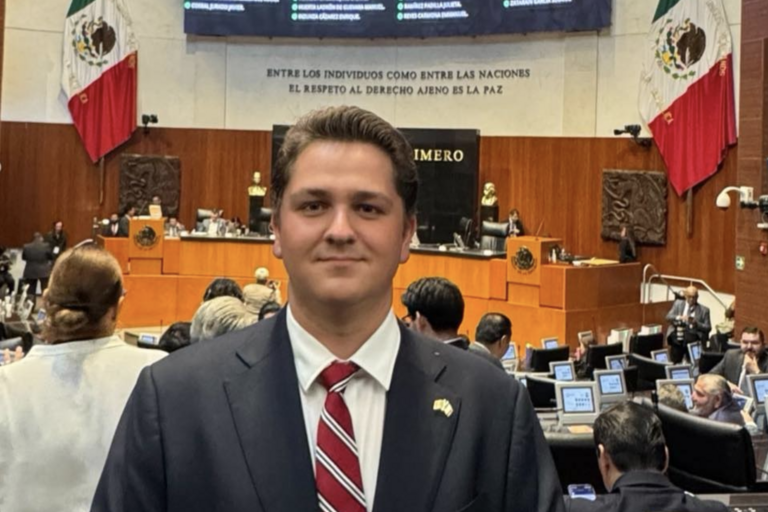
Jackson Ribler
Publab Fellow 2026
Jackson Ribler is a ninth-generation “Florida Man,” currently working on his PhD at UC Berkeley’s Department of Spanish and Portuguese. He obtained his bachelor’s in Spanish from Virginia Tech and his master’s in Spanish literature from Georgetown University before teaching at UNAM FES Acatlán as a Fulbright ETA. His academic interests are largely concentrated in the 1960s–1970s, representations of the Dirty War, prison literature, lucha libre cinema, and Mexploitation films. In addition to Spanish and Portuguese, he is learning Mexican Sign Language (LSM).