
Saida Blair Portfolio

“Untitled (Jamaica 1)” (2023). Digital collage. Copyright Saida Blair (2026)
Blair’s work starts with photography; nevertheless, this medium is not a containing frame. Astute and careful, her multimedial assemblages navigate the intersection of form and the oral tradition. Always in the quest to reveal and challenge a regime of visibility that had forced itself to be recalled and memorialized.
Collages and jacquard-loom fabrics wove together familiar photographs, narrations, and back notes that enlarged the imaginative domain of images, binding together a wide spectrum of Black bodies systematically overlooked or excluded from the usual frame of reference. The knitting is meditative, always intentional, as a gospel or a dancehall; her works allow an extensive range of tones full of nuances that can bring into the visible frame what has been confined to a relationship of estrangement with light, sound and shadow.
By shifting the focus and medium, Blair’s work asserts that exposing, developing, framing, and narrating can bear new meanings, once we allow ourselves to reconsider the relation between subject and photographer. To do so, juxtapositions, repetitions, and medium alterations occur at a material and digital compass. Photographs are knitted on a loom, as landscapes reverberate into collages not as the usual evidence of loss and destruction, but as successful testimonies that contradict the common setting of the black diasporic subject.
Blair insists on weaving what has been violently woven out to relocate these subjects within their own imagined territory, striving against technological warfare to sign them off. If one looks closely enough —an exercise that her multimedia weaving asks for— one can see, feel, and hear that the transition from photography, through collage, to weaving helps explore how technology and human endeavor collide. They offer a scant reminder that our multiple technologies of erasure always reveal the trace and the fate of the human endeavor and destiny. Blair’s work begs to insist that weaving or taking a photograph are technologies that can be used for violence and obliteration, but also for memory and peaceful placemaking.
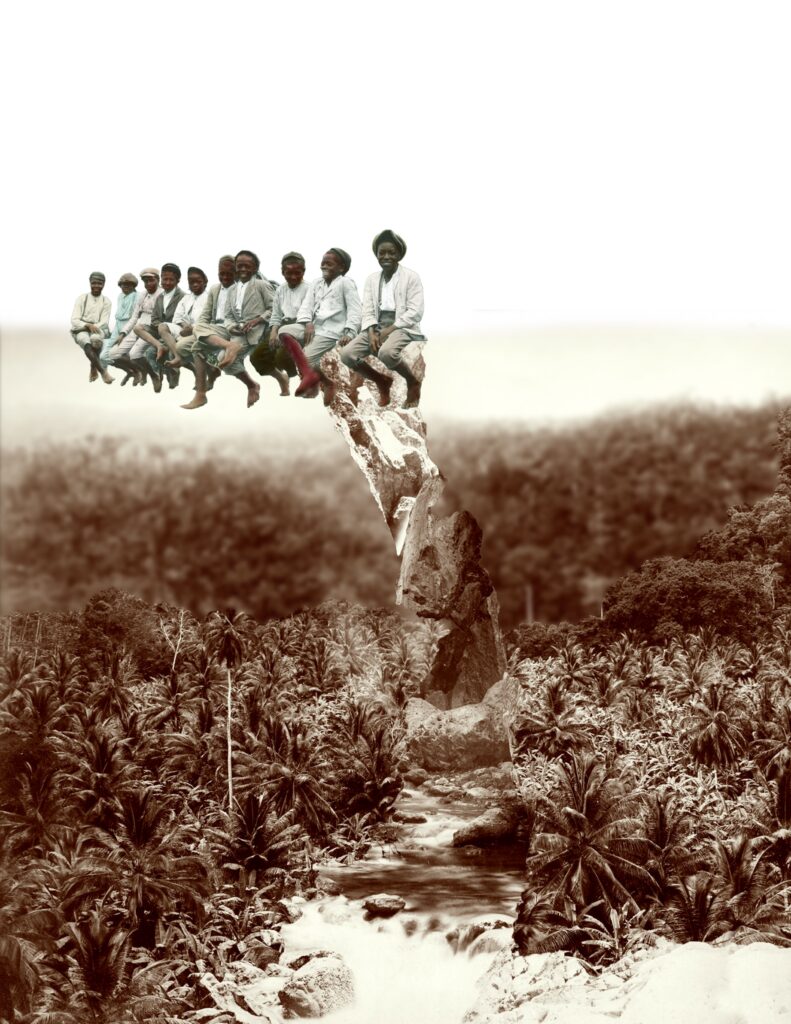
“Untitled (Jamaica 2)” (2023). Digital collage. Copyright Saida Blair (2026)

“Untitled (Outlier)” (2019). Analog photography. Copyright Saida Blair (2026)
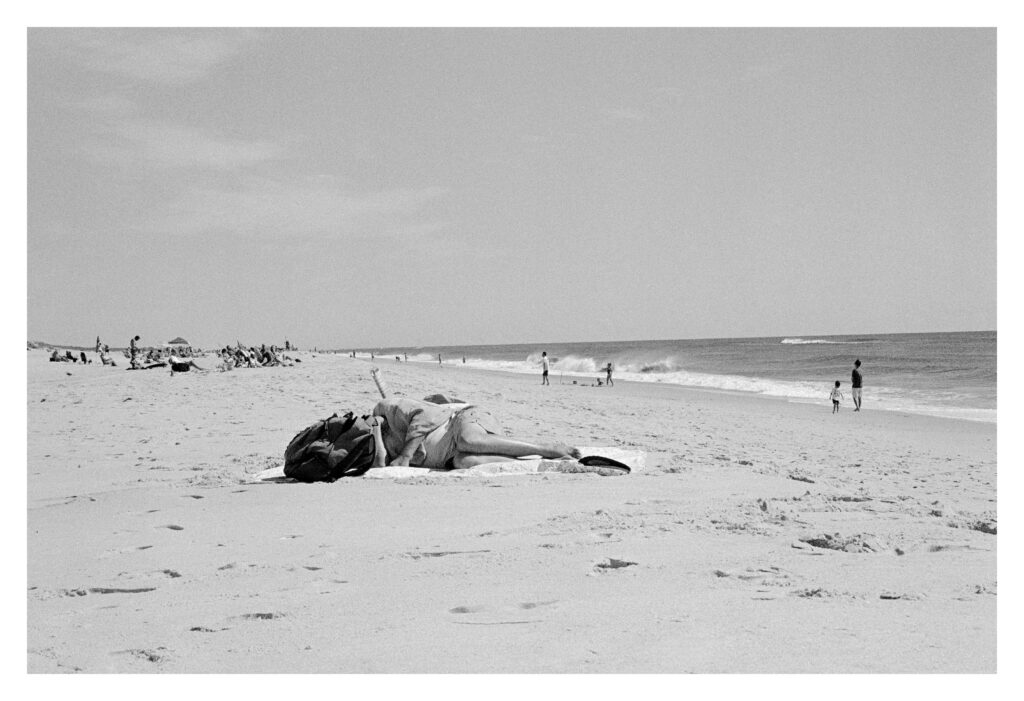
“Untitled (Outlier 2)” (2019). Analog photography. Copyright Saida Blair (2026)
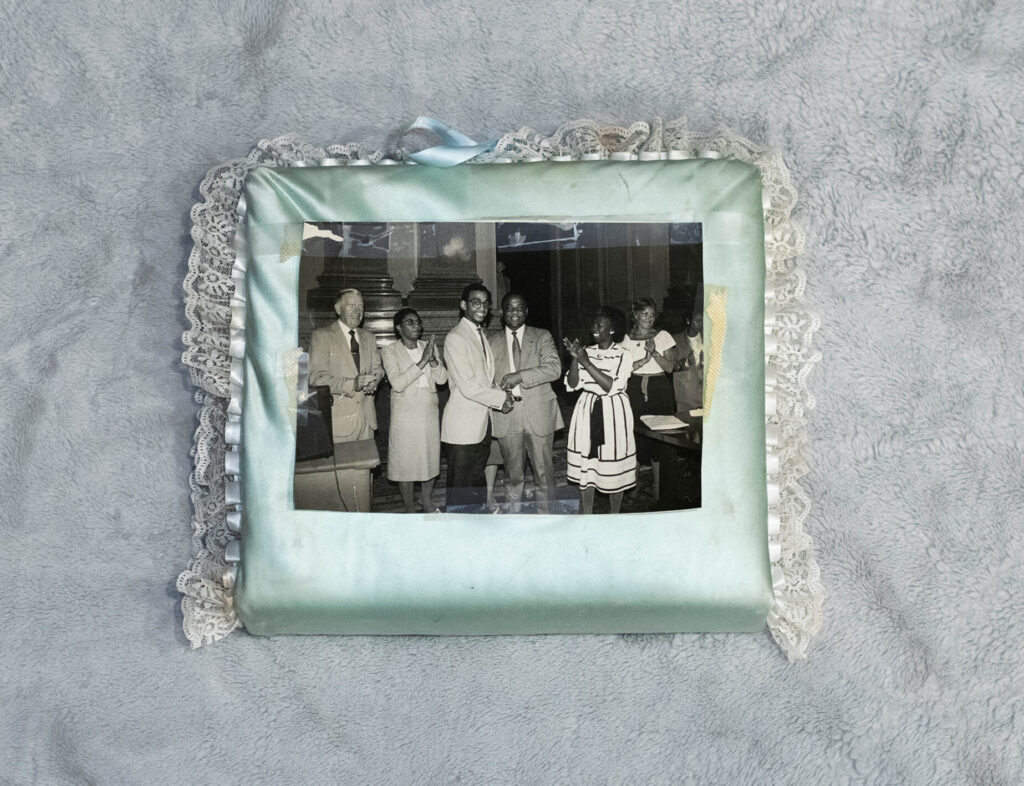
“Erik and Goode” (2021). Digital Photography. Copyright Saida Blair (2026)
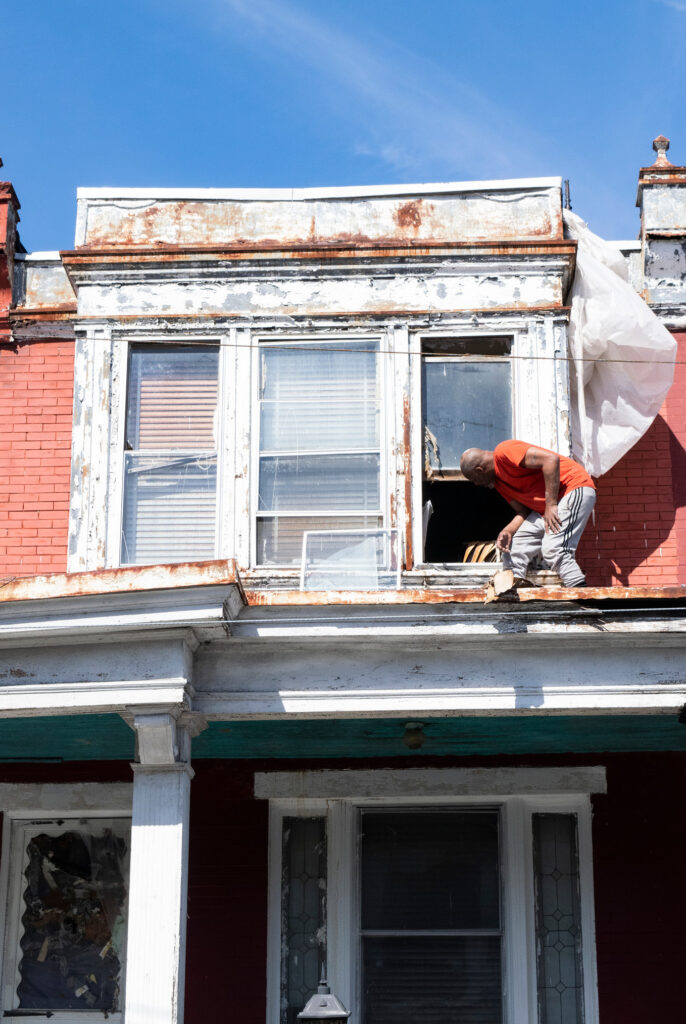
“Wellness Check” (2021). Digital photography. Copyright Saida Blair (2026)
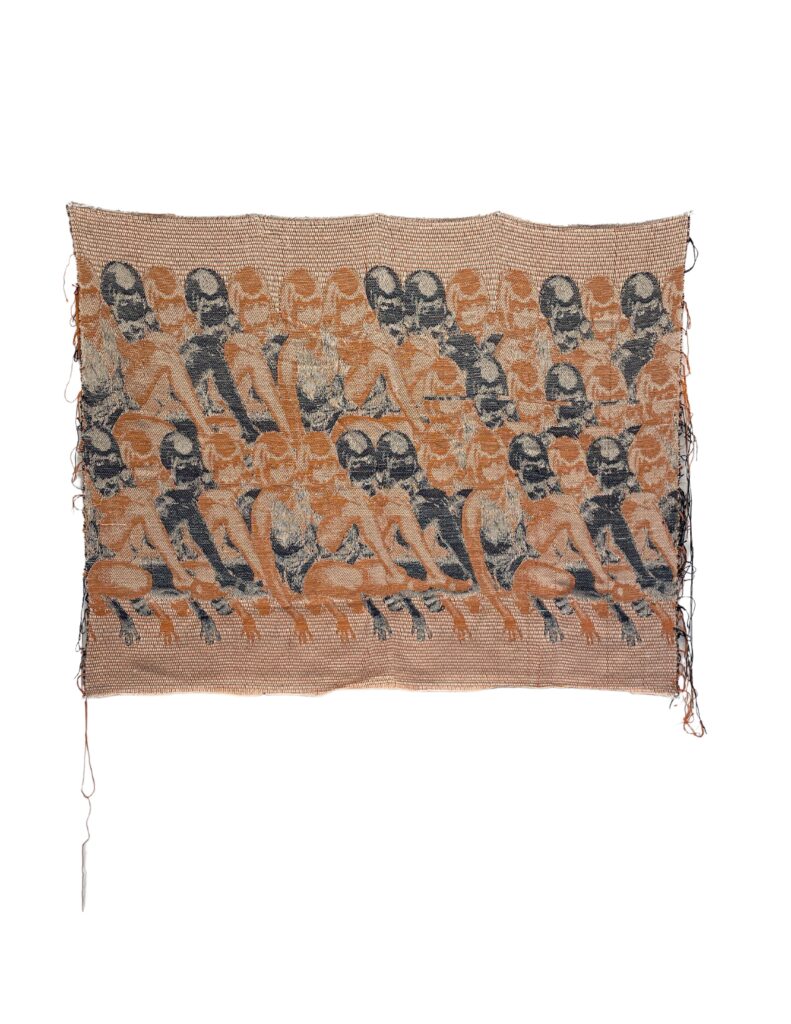
“Untitled (Marian)” (2024). Handwoven on TC2, cotton and metallic. Copyright Saida Blair (2026)
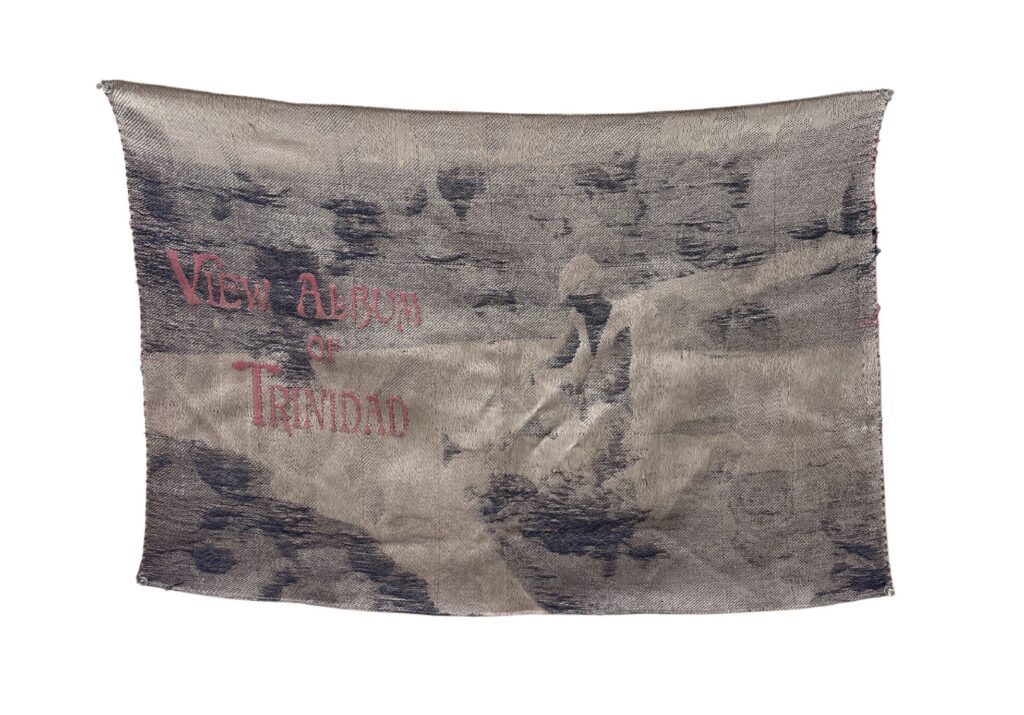
“Trinidad” (2024). Handwoven on TC2, wool. Copyright Saida Blair (2026)
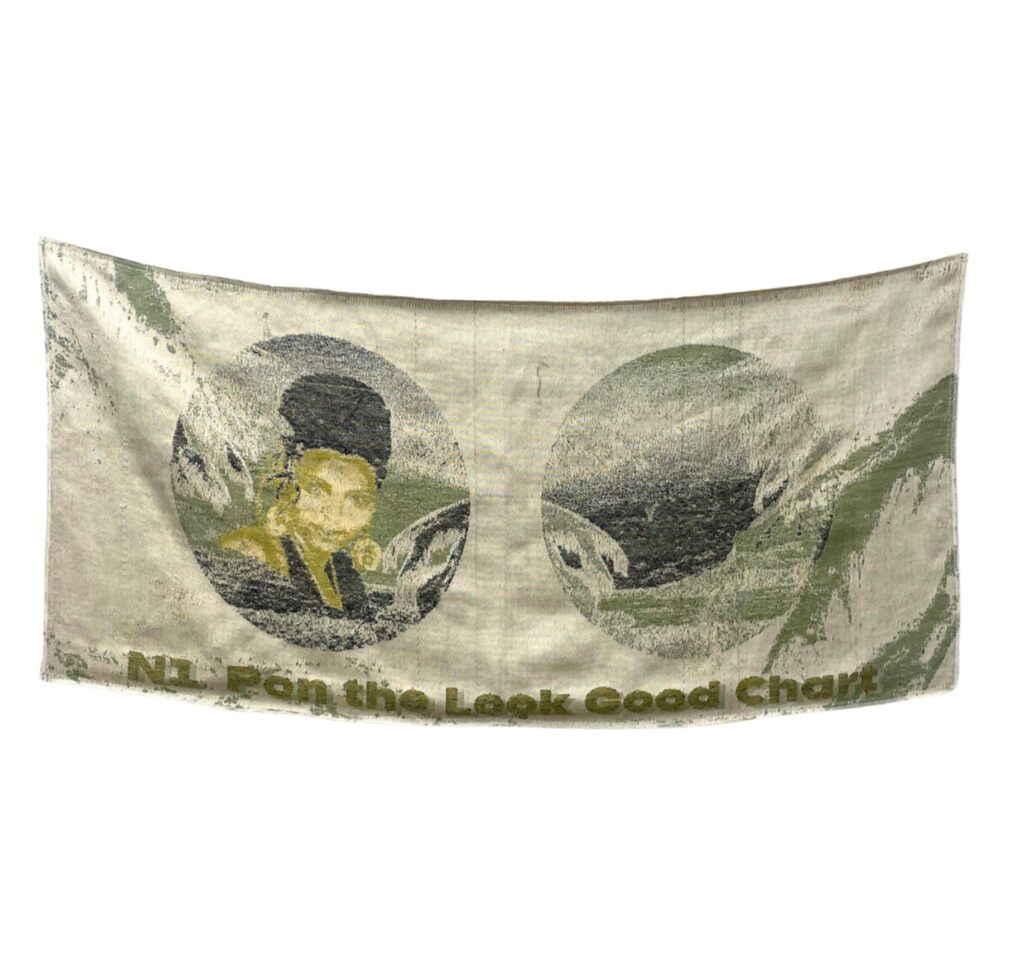
“No.1 Son the Look Good Chart” (2024). Handwoven on TC2, wool. Copyright Saida Blair (2026)

Saida Blair
Saida Blair (b.1998) is an interdisciplinary artist and curator from Harlem, NY. Her works traverse photography, multimedia collage, and complex jacquard loom fabrics. Stemming from a careful exploration of the oral and musical tradition together with the archive, she wove imaginative ways of understanding Black and Caribbean communities’ placemaking. Her work has been featured at the Homeplace, SAIC Open Studios, Chicago, IL, Davis Gallery, Geneva, Purchase College, and The Metropolitan Museum, New York, NY. She has co-curated[1] The Black Domestic at SITE Galleries and The GREYSTONE Collective in Chicago. Blair holds a BFA in Photography and Art History from SUNY Purchase and an MA in Visual and Critical Studies from the School of the Art Institute of Chicago. Saida loves birdwatching, and she is a passionate supporter of urban farming and musical theatre.
Find more of her work on her website
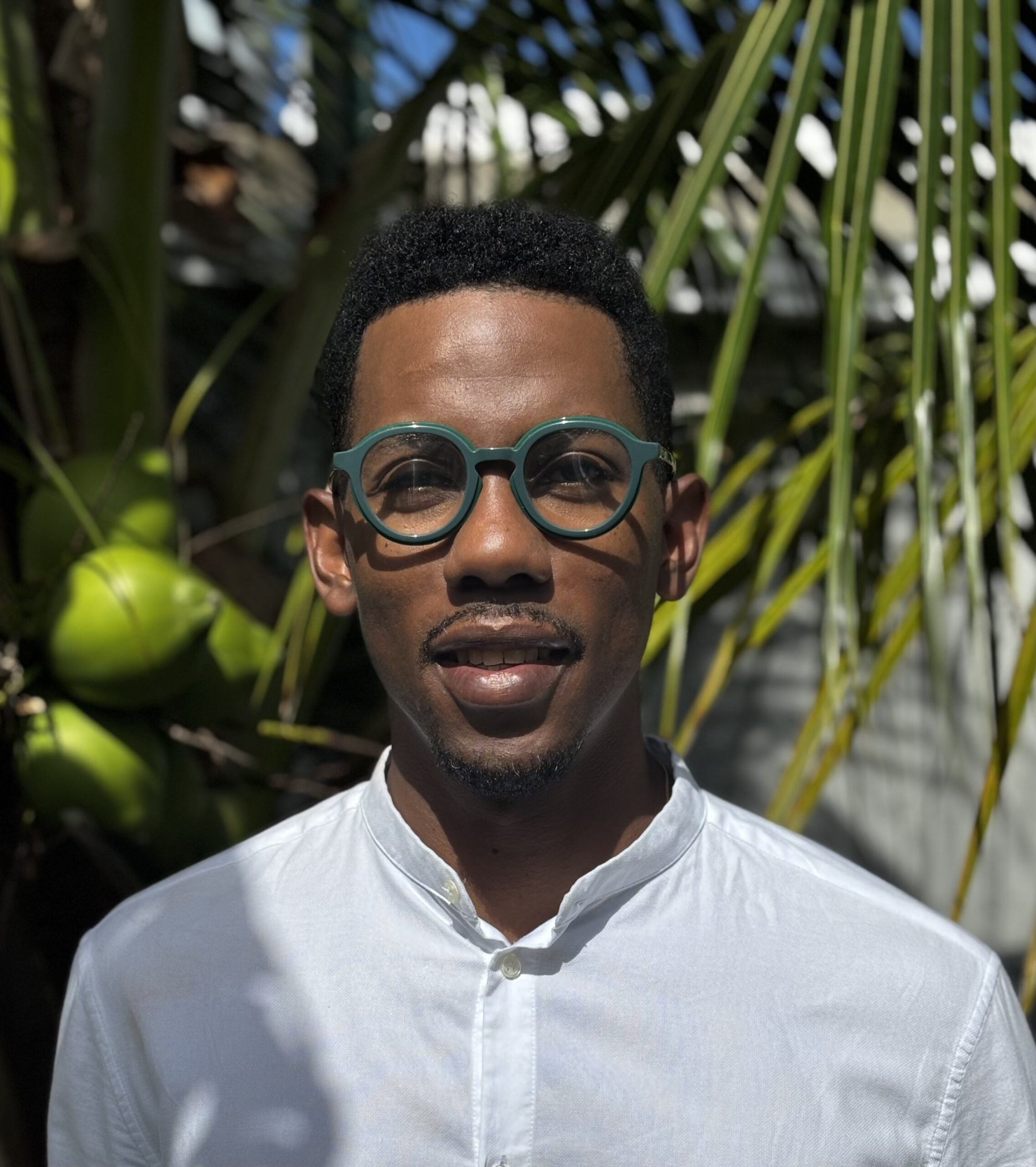
Sedney Suarez Gordon
PubLab Fellow 2026
Sedney Suarez Gordon (b. 1992) is a writer and translator of Creole and Spanish literatures. His work has been published in Revista Universidad de Antioquia and other anthologies such as Leer el Paisaje (2022). He is a PhD candidate in the interdisciplinary humanities at University of California, Merced.