
Querida

Emily Lauletta, “Caracas through Catalpa,” 2026, digital collage. Background photograph of El Paraíso tunnel and catalpa images courtesy of Wikipedia Commons.
Marcello cursed through ground teeth at the backpack zipper as it caught for the fourth time on the plastic wrapping of the diapers. Pulled taut between the metal teeth, the plastic warped and loosened with each catch. The zipper’s unforgiving mouth chewed at the clear and blue wrapping, leaving several saggy ripples.
“For the love of Christ,” he grunted. His clammy, calloused fingers pried the plastic from the metal mouth, stretching and thinning it, until it tore open. The wounded, deckled edges bent in delicate folds. A shred of plastic taunted him from between the carnivorous teeth, but the zipper slid along the metal just fine. Marcello inhaled and his eyes fluttered closed for a moment. He swung his backpack over his motorcycle jacket and slid his arm through the waiting, vacant strap.
A shred of plastic taunted him from between the carnivorous teeth, but the zipper slid along the metal just fine.
The narrow two-lane street had grown quieter since his arrival. The catalpa trees’ long, fingerlike pods created sinewy shadows beneath the streetlamps. Marcello glanced up the street, then pulled his keys from his front pocket. The doors to the local market slid open to allow a young couple to step into the dark, and Marcello watched them turn and continue up the steep sidewalk, stepping over protruding catalpa roots that had cracked through the cement. The young man was about his age, he thought, maybe a bit younger. Mid-twenties. The woman scoffed at something the man said and bumped her shoulder against his. The man stumbled for a moment, laughing, then linked his arm through hers.
Marcello blinked a few times and turned his attention away from them. He grabbed his helmet from the handlebars and slipped it over his head. His forehead had started to sweat again; the cool reprieve the grocery store had offered him was already gone. The damp inner lining of his helmet flattened his black hair, curling from the early spring heat that had settled in Caracas. He swung his leg over the motorcycle and sat down, readjusting the backpack.
He turned the key, and with a throat-clearing grunt, the bike rumbled steady. Marcello nudged the kickstand flush against the bike with his heel. Kicking off the crumbling curb, he steered to the foot of the hill and took the next right at the end of the block. After growing accustomed to carrying Cata’s purse in his backpack every time she rode the bike with him, he thought the diapers were comically light by comparison.
Marcello cruised through the roads, the amber streetlights guiding his way. The warmth of the light was gentle and welcome after spending days in the hospital with Cata. He often went for nighttime rides on Mondays when the city’s chatter hushed to a whisper and he was one of the few people on the road.
He thought about how unquiet the hospital was. He had been to the emergency room a few times in his adolescent life—only going for breaks that he couldn’t tape up himself. Between the paperwork he could hardly understand, the medicine shortages, and the long waits, the trips just didn’t seem worth it. When he had gotten into a minor motorcycle accident a few months ago, and the ring finger on his right hand bent in the wrong direction, Marcello had Cata tape up his crooked finger. She had called it “the claw.” For weeks, he felt like he was wearing a mitten, unable to separate his fingers from each other.
She had called it “the claw.”
Marcello eased his grip on the gas and came to a rolling stop at the traffic light. He hoped that Cata had managed to get the baby to sleep. As he left the apartment, he had told her he was going to get diapers. When she hesitated before responding with a neutral “okay,” Marcello knew that she knew he needed time.
A few months into dating, Marcello brought Cata to his house for dinner. Still living at home, he planned the evening for a night he knew his parents would be dining at the neighbor’s house. Marcello blinked the smoke from his watery eyes, pressing the steak tips against the blackened grill, and heard the juice crackle against the hot carbon. Cata stood near him, occasionally sipping from her glass of red wine, and watched him grill. He saw her smiling at him from the corner of his eye.
“I love you, Catarina.”
She laughed. Cata placed her glass on the patio table and threw her arms around him. She kissed his sweaty neck, then cheek, then pulled back to look at him.
“Mi amor, I love you.”
The organic sizzle of the fire could not compare to the recorded, repeated sounds of a hospital. No one had prepared him for the incessant beeping of the monitors, and the nurses coming in and out of the room, and the doctors asking questions that had already been answered several times.
As soon as the light turned green, Marcello cranked the gas, quickly gaining speed. He zipped around a few cars on the street, seeing how many green and yellow lights he could eat before having to stop at the inevitable red light. He lowered his body closer to the handlebars and sped up, climbing the ramp and merging onto the three-lane highway, where he wove back and forth between two semitrucks. The engine cranked beneath him. Marcello gripped the handle. He got close enough to read the fine print on the ad plastered across the back of the semi in the middle lane, then bowed right slightly before skipping between the ends of the trucks. He skirted just ahead of the truck in the left lane. Marcello panted in his helmet, the exhilaration of his presence, his motorcycle, and the highway reminding him who he was.
Cata panted in the hospital bed, her knuckles white as they gripped the plastic railing. Marcello watched her grit her teeth and moan through another contraction. He watched sweat trickle from her hairline and snake down her red cheek. It trailed across her jawline. A drop collected at her chin, getting bigger and bigger, then fell onto the light blue sheets. Cata’s mother said something to Marcello, but before he could try to understand what she said, the room fell silent. The monitors beeped.
A baby cried.
Marcello looked at his daughter as she screamed her first breaths, and he wept. They hadn’t planned for this. They had wanted children, one of each. Then the president died. The price of oil plummeted, so Marcello lost his job at PDVSA. He and Cata decided to wait. They would save every bolivar they could to make it to America.
They would save every bolivar they could to make it to America.
Gripping the handlebars with eyes fixed on the white-striped gap between the two semitrucks in front of him, Marcello remembered Cata’s face on the day they found out she was pregnant. Four years of saving, and Cata had just taken a new job that would help move them to Miami. Four years of watching family move away, people camping in dirty tents outside hospitals, police throwing tear gas at starving people, and friends disappearing off the streets.
“Now what?” Cata had asked. Tears rolled rivers down her blanched face. “Marcello, what do we do now?”
Marcello gasped and choked inside his helmet. All the air was leaving his body in wet grunts, and none of it was going back in. He couldn’t feel his fingers or his feet. Another truck pulled away from his right, so Marcello relied on muscle memory to guide the bike across the two other lanes and off at the first exit.
A red light. Marcello eased up on the gas and the bike slowed to a standstill. His temples and hands pulsed. His shirt stuck to his back, and even when he tried to roll his shoulders, the cloth moved with him. The bike’s vibrations reverberated through him, and his shaking breaths synced with the motor’s hum. His backpack, although light, pressed against him: a reminder of the wife and baby that would wake up soon. Marcello looked up and El Ávila, the dark shadow that lifted the horizon closer to the clouds, pulled him in.
The light turned green. The bike rolled forward, and Marcello coasted through each flashing yellow that lay ahead of him. His focus on the open road softened, and he took notice of the fading city as its outskirts gave way to El Ávila. The buildings shrank into dusty, stacked blocks, the streets more littered, the streetlamps sparser, and the mountains taller. He blurred past a boarded-up gas station, the graffitied eyes of President Chávez watching him. Past the men sleeping beneath the cracking cement awning, using loose wooden boards as mattresses and the spring humidity as quilts.
When the buildings fell away, the leaves greeted him. Rocks encouraged his snaking climb up the side of El Ávila, their muted bands of rusting reds molded into grooved arrows, pointing higher and higher along the pebbled road. The moonless shadows dissipated, giving way to blue.
The moonless shadows dissipated, giving way to blue.
Marcello’s bike slowed. He veered away from the waking orange sheets of stone and toward the greening leaves. Just beyond the road, he dismounted the bike and popped off his helmet. He sighed, relieved to feel the last of the cool dawn air against his sweaty forehead. Marcello ran his hands through his curls and shook them out. The longer he stood on solid ground, the more his heart slowed. Balancing his helmet on the handlebars and slipping off the backpack and jacket, Marcello felt lighter.
He followed the parted grasses and leaves, a narrow path that he had taken with Cata, the ring weighing heavily in his suit pocket, seven years ago. The trees distanced from each other and the cliff bared itself open. Standing among the leaves in a sweaty blue polo and worn jeans, he closed his eyes and breathed. He heard the macaws laughing distantly overhead. The frogs’ whistles and songs hushed. The wind slumbered, and its silence opened space to hear the ants. They whispered to him about a great loss. Alone, on the mountain’s familiar face, his heart broke for the city he would soon have to leave.
The sun had not yet risen, but the dawn’s pinks and oranges settled on Caracas. Staring down at the valley where he had lived all his life, he thought of Cata and Fabiana. When he held his daughter for the first time, she didn’t open her eyes. She slept, dressed in a pink onesie the hospital staff had wrapped her in. Marcello ran the pad of his index finger along the bridge of her nose, and Fabiana raised a sleepy fist. It teetered and wobbled, knocking gently against Marcello’s finger, now still and touching the tip of her nose. Her fist opened, and she wrapped her tiny pink fingers around his. Marcello wept once more, wet chuckles breaking the hospital’s postpartum silence.
Her fist opened, and she wrapped her tiny pink fingers around his.
He stole one more moment on El Ávila, and pictured his apartment from the top of the cliff. Cata would be standing in their kitchen, waiting for the moka pot to sigh its rising trail of steam and listening for the front door. Fabiana would be waking up soon.
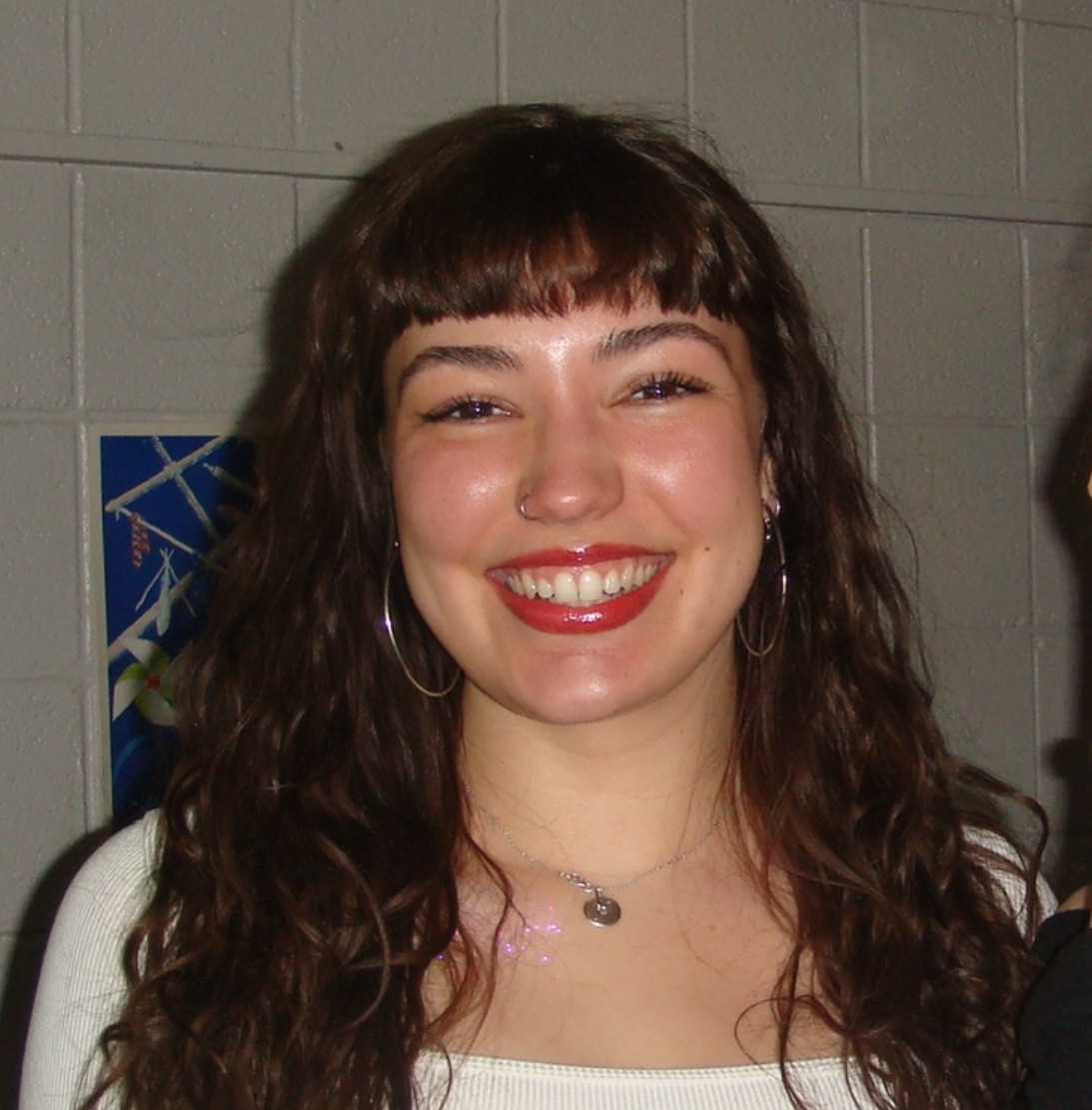
Emma Solórzano
Publab Fellow 2026
Emma Solórzano was born in Caracas, Venezuela, and raised in Miami, Florida. She is a recent graduate of Swarthmore College, where she received a bachelor of arts in English literature and classical studies. She works as an intern for New Door Books, a Philadelphia-based small press, and has published work in the Swarthmore Classics Journal, Small Craft Warnings, and American High School Poets. This fall, she will begin a master of fine arts in fiction at The New School in New York City.

Emily Lauletta (Artist)
Publab Fellow 2026
Emily Lauletta is a zine-maker and collage artist living in Los Angeles, California. She runs her own feminist zine, Arachne, which includes visuals that explore the intersection of girlhood, nostalgia, anti-capitalism, and visions of utopia. She is a PhD student in cultural studies at Claremont Graduate University, and teaches in the Gender and Sexuality Studies Department at Cal State Fullerton.